We continue our study of 宝拳十六法 Hōken Juroppō, with 手起拳 shuki ken. We used the 五行の型 Gogyo no kata as a platform to explore this fist.


We continue our study of 宝拳十六法 Hōken Juroppō, with 手起拳 shuki ken. We used the 五行の型 Gogyo no kata as a platform to explore this fist.

I began class with 掛倒 Ketō. I was fortunate to study this in Japan a couple of weeks ago with more than one instructor. Nagato Sensei did a nice interpretation.
We continue our study of 九構 kyuu kamae with 十文字の構 jumonji no kamae. I began showing the basic stance and its roppo variations. Then we did ukemi and taihenjutsu.

I began class with 風盂 Fūu. Muto dori that borders on mystical. But I shared a trick I learned recently from Soke to use your shako ken like totoku.

We continue our study of 九構 kyuu kamae with 飛鳥之構 hichō no kamae. Many people struggle with this stance because of balance.

We continue our study of 九構 kyuu kamae with 平一文字の構 Hira Ichimonji no Kamae. First I showed how to use 六法の構 roppou no kamae which naturally includes 鷹の舞 taka no mai.

We warmed up with 雷光之剣 Raikō no Ken. I began class with 一撃 Ichigeki. This kata is all about control of space.

Many times in my advanced classes I use a kata as a starting place to draw in ideas from my training in Japan. For example, with 虚空 Koku, there is the use of the physical space, but also the metaphysical.
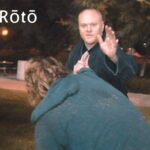
Rōtō. We warmed up with some very advanced ukemi and taihenjutsu over and on top of obstacles. I began class with the kata 浪倒 Rōtō.